This post is partly about loosing my name, partly about pregnancy, partly about death and surely about birth. Some of you already know that I gave birth to a little girl and we named her Idun Aishe. I wanted to write a lot during pregnancy but I couldn’t. And perhaps this post is also about that, being scared that something will happen. That much that you do not even want to talk about it. Because if something happens you do not need to deal with the after effects of informing others about it.
During pregnancy I have read a lot of books about babies, pregnancy, parenthood and so on (after birth I read nearly nothing though). By far the most important quote that I come across is this one:
“Making the decision to have a child – it is momentous. It is to decide forever to have your heart go walking around outside your body. ”
— Elizabeth Stone
When I read it, I felt how real it was. Every parent that I had a chat with agreed that this is true.
We longed for this little human being for some time. Being a lesbian couple and wishing to have a kid is an incredible journey. I am not saying any other is not. It is just, this is the one I know very well. Both of us gone through the whole IVF process several times. And if you ever knew someone who had the experience, you would know that even once is a lot. I am the luckiest person to be married to a viking. She is my rock! After long wait and tries, finally Idun decided to arrive when we moved to the US. But before that we learned to let go, to accept, to give up, to fight, to endure, and surely to lean on each other. I especially learned one big thing that will stay with me forever. Hope is a very dangerous concept and I decided to take it out of my life and even vocabulary. Johanna does not agree with me but my feelings on this has been life changing. The moment I read Pema Chödrön’s thoughts on hope, I felt a revelation. Hoping to be a mother/parent was at some point weighing heavy on me. I can easily say that it was not an easy process to stop hoping but yes I managed to do it.
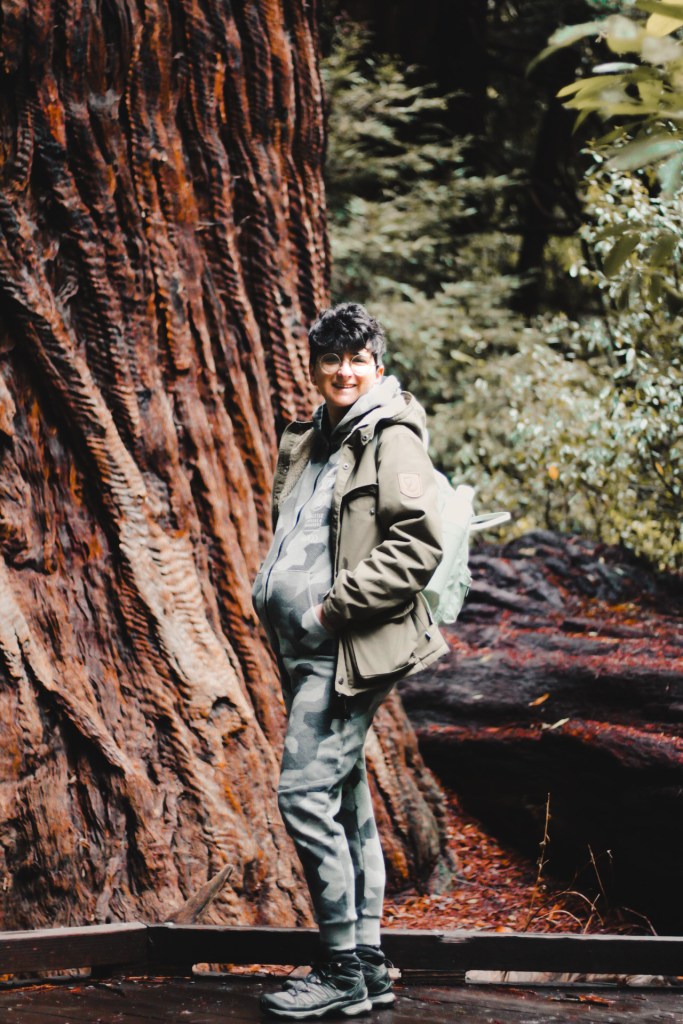
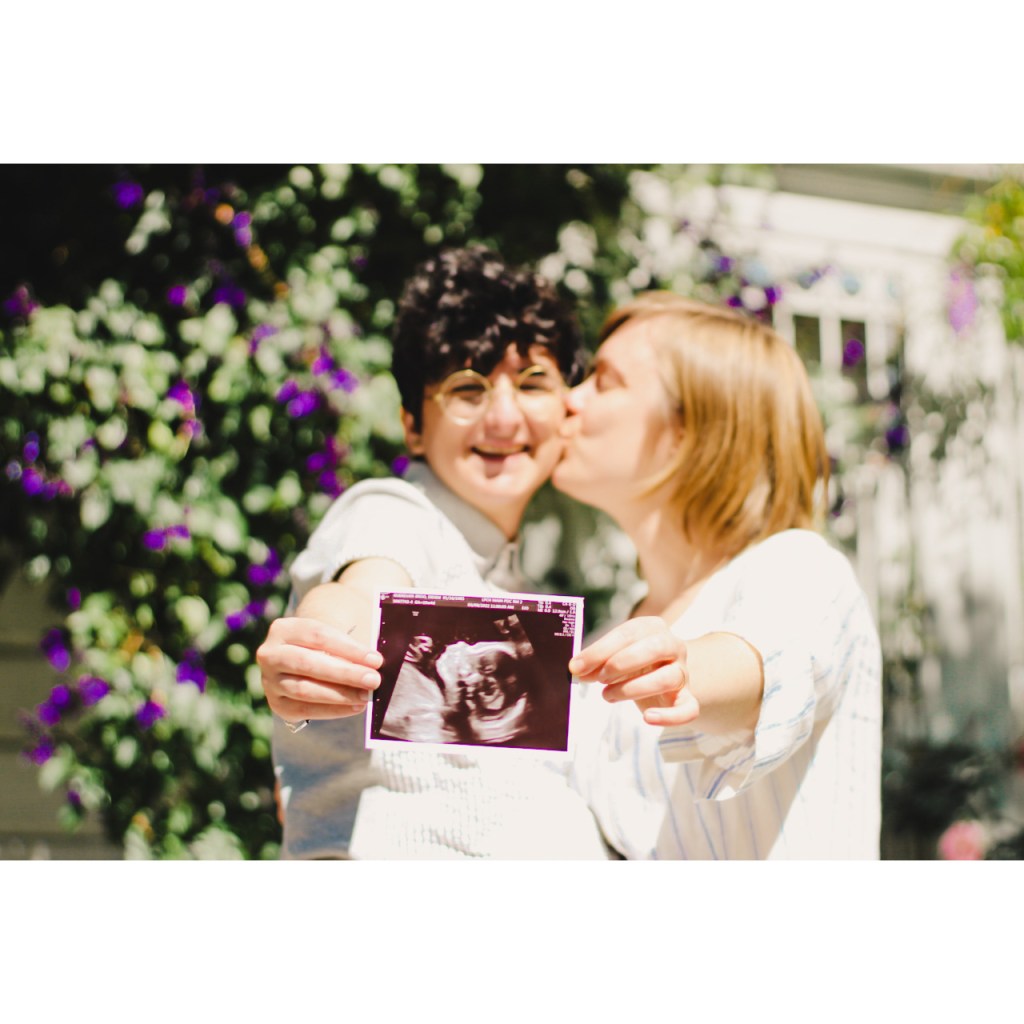
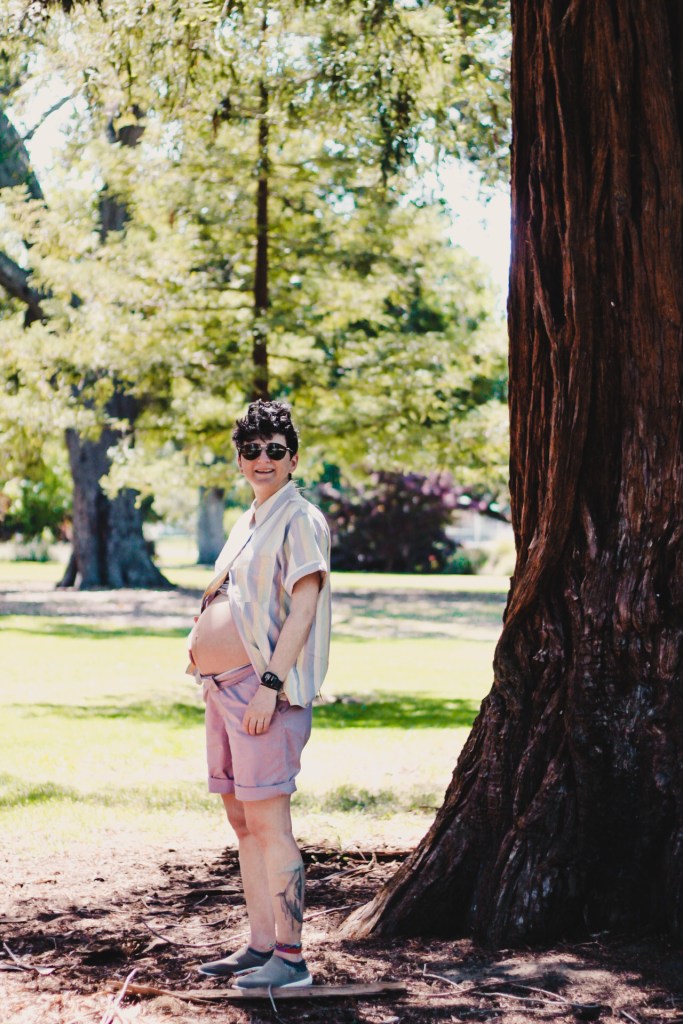
I surprisingly enjoyed the pregnancy. OK, maybe not the first 3 months 🙂 I barely remember some weeks from December to the end of January. I was sleeping. But then we were out and about, travelled as much as we can and I loved my belly. I proudly showed it in photos (check below). It was incredible to see, feel, hear the little one both for me and for Johanna. I can say that we enjoyed every minute of it. I swam once a week until the very end of the pregnancy and after gaining 16 kg, I understood the meaning of gravity every time when I left the pool. Also, I learned to slowly getting used to narrowing down my closet and cloth options. It is not a joke, one day you have all the fancy shirts that you just bought a few months ago (because you are not hoping anymore) and the next day you have one short, one pant and a few t-shirts. Also they do not match 😀 I know I will be a less body conscious person after this experience!

I said that the post is partly about losing my name. Yes, at one point, I lost my name, and it didn’t bother me at all. I know you are full of question marks 🙂 Here is the story: I had a very dramatic labor and delivery. I was COVID positive, and my water broke a week earlier than the planned due date. Towards the end of the delivery, my oxygen levels and heart rate were so low that I don’t remember the numbers. My body decided that the best thing was to put me in sleep mode. I woke up from time to time to check if the baby was fine, and in the end, the only thing I saw was way too many people in the room with very concerned looks on their faces. I thought something was wrong with the baby. Thankfully, she was fine. Instead, it was me who was not well. The thing is, you don’t know how bad the situation is when you’re the one in danger. They immediately sent me to the intensive care unit, and I stayed there for a few days. So how did I lose my name?
When I was in the ICU and Johanna was at home (because she tested positive for COVID the very next day), Idun was alone in the maternity unit. Nurses and volunteers took our place and fed, loved, and cared for her. When I started to feel better, they thankfully discharged me to the maternity unit (even though I was a lot of work for the maternity unit), and there, my name was “mama.” “How are you feeling, mama? Do you have pain, mama? Did you feed her, mama? Here is your food, mama,” and so on. 🙂 Yes, I was no longer Didem. While I found it interesting, it didn’t bother me at all.
Finally, the day has come, I was one of the mamas.
** Kudos to Lucile Packard Children’s Hospital Stanford for saving me and taking care of us! I cannot thank them enough and cannot imagine any better place to experience something like this. They have gone above and beyond every minute of our stay.
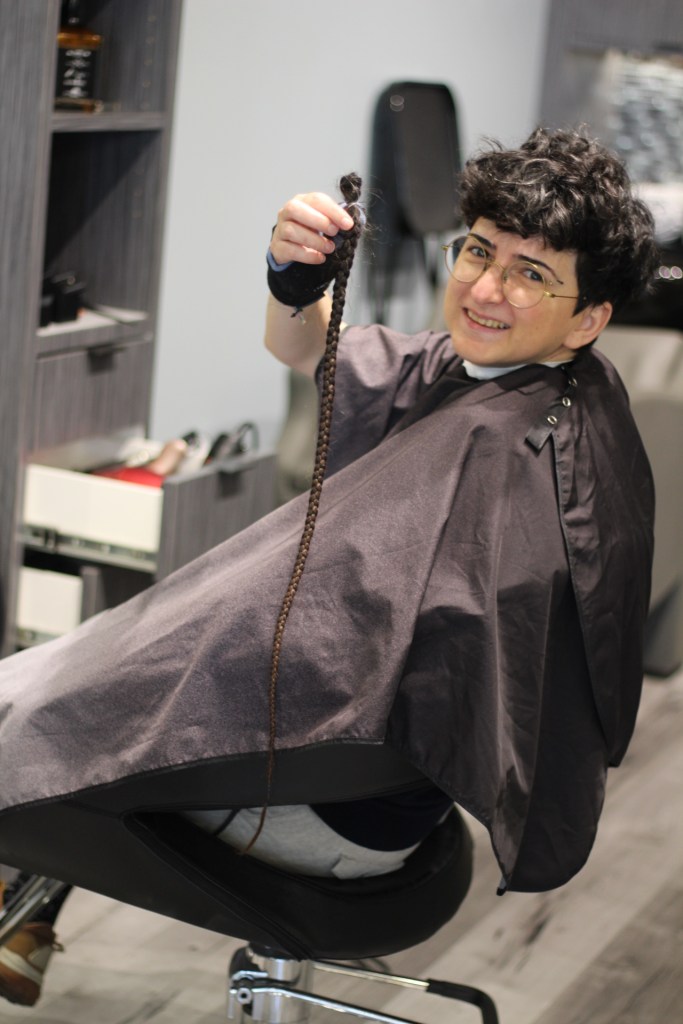
I also lost my rattail. And some of my friends and family know very well why.
You might not know, but I was a metalhead when I was a teenager. For that reason, my knowledge of popular music is really bad. I’m not embarrassed to not know the difference between Shakira and Rihanna (apparently, they weren’t even popular at the same time period). I mean, that’s how bad it is 😀 I thought I would never listen to anything other than trash metal when I was 17. But like others, I grew up and started to listen to rock music at some point. More interestingly, I later started listening to psychedelic trance and techno music in my late 20s.
I have been to many music festivals, and I have met so many genuinely good, interesting, loving, and caring people at these festivals. One time, I met this guy who had just returned from another music festival in Goa, India. He told me it was his third time and explained how much he enjoyed being there. He also showed me his rattail and told me that he decided to grow one when he was there for the first time. I asked if it meant anything, and he said he was having it because he wanted to have something, and the tail reminded him every day of what he wished for. I don’t know if it was the music, the discussion, the late night, or something else 🙂 but I just fell in love with the idea. And right away, I knew what I wanted. I wanted to have a child (Later, I learned that it is called shikha in hinduism. You should read about it. Apparently, it existed under different names and meaning throughout the history.)
Today is the 40th day of our daughter’s birth. Many societies, cultures and religions celebrates this date.
“In rural Guatemala, traditional midwives emphasise the application of heat in the postpartum period. New mothers are instructed to use heated water to preserve their warmth; they might take a sweat bath, a sitz bath or an herbal bath, according to region. Guatemalans believe that a hot bath increases the flow of milk, ‘lowers’ the milk into the breasts and prevents breast milk from becoming ‘cold’.
According to the Chinese custom of zuo yue zi (‘doing the month’), the new mother should not go out into the sunshine, walk about, read, cry, bathe, wash her hair, touch cold water or engage in sexual intercourse. After giving birth, the mother is expected to be kept warm and to be protected from ‘the wind’.
In Mayan Indian culture in Yucatan, Mexico, in the first week following childbirth, the Mayan mother and infant are considered ‘hot’ and must remain secluded in the house to protect them from ‘cold’ evil wind. Among Mexican Americans, the postpartum preference for a warm environment may restrict full bathing or hair washing for up to 40 days after giving birth.
In India, postpartum confinement typically lasts up to 40 days. This seclusion is to protect the new mother and her infant not only from evil spirits, but also from exposure to illness, because both are considered to be in a vulnerable state after birth.
In the Middle East, resting 40 days after having a baby is customary in Jordan, Lebanon, Egypt and Palestine. During this 40-day period, someone comes to the house or stays with the new mother to take care of the baby, the house and the other children, so that all new mothers have to do is rest.”
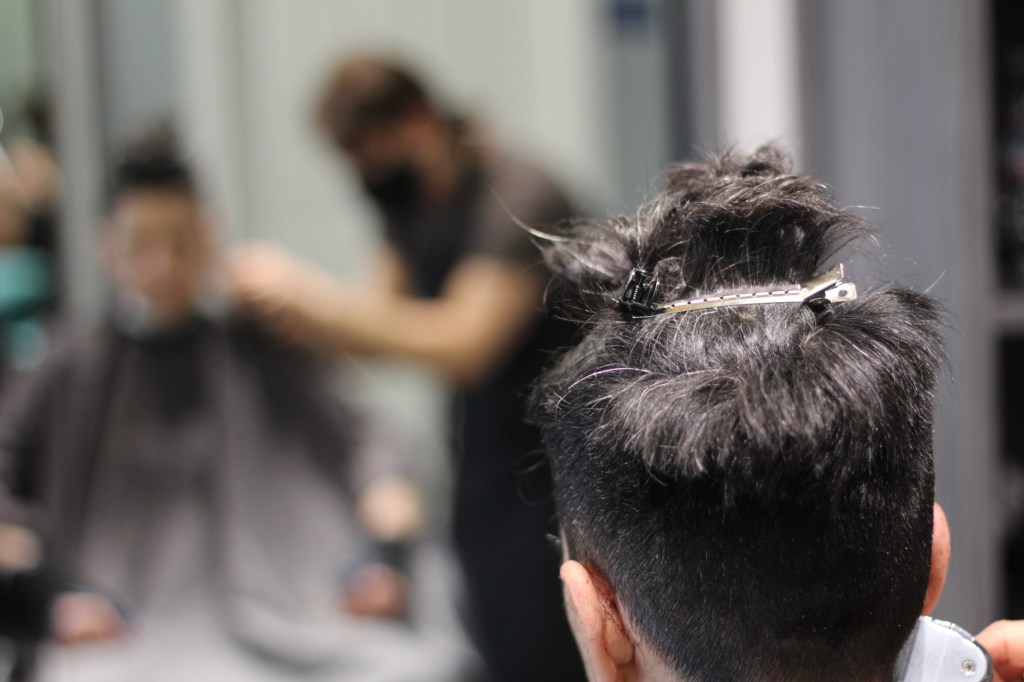
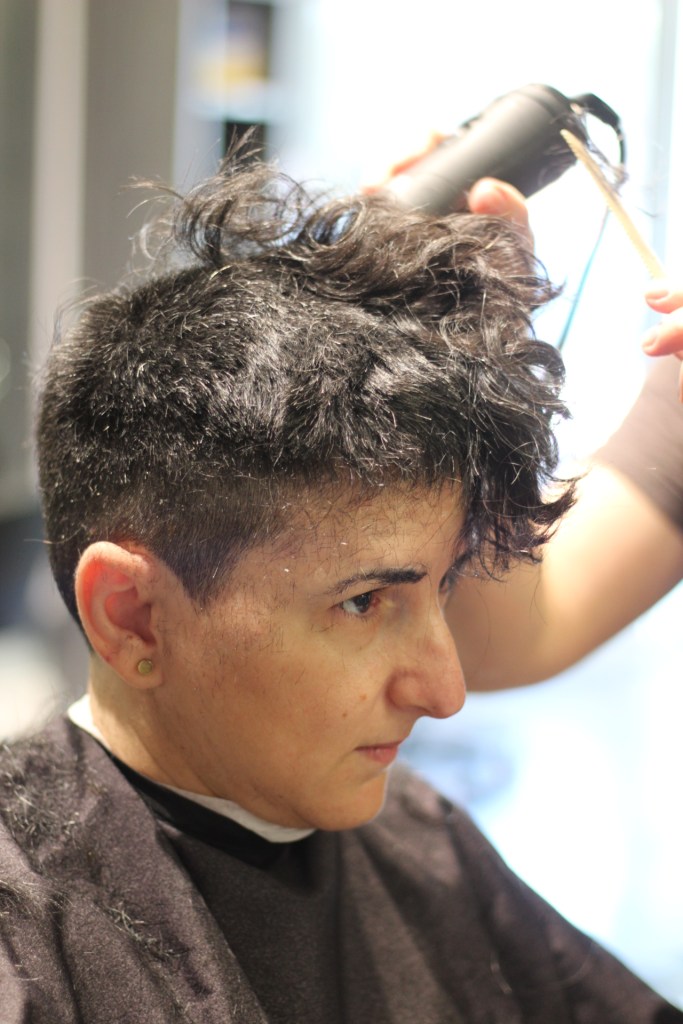
I decided to celebrate the arrival of Idun Aishe as Chagga women from Kilimanjaro region do. By shaving my hair!


 Didem Gürdür Broo