
I am soon on my way to Visby to join a panel at Almedalsveckan and the topic requires us sitting with some uncomfortable questions.
The panel is called Avoiding digital slavery: Challenges for workers and teachers from advancements in AI and robotics
There is a robot arriving in Swedish homes. It cleans, it assists, it moves through domestic space with an uncanny fluency. And somewhere (in Manila, in Nairobi, in a city you will never see) a human being is guiding its hands.
This is not science fiction. Companies like 1X are already shipping teleoperated humanoid robots. Others are paying workers in lower-wage economies to perform household tasks alongside robots; not to help, but to generate the training data that will eventually make those workers unnecessary. The robot is visible. The worker is not. That invisibility is not an accident. It is architecture.
We have been here before. The original “Mechanical Turk”, the 18th-century chess automaton that astonished European courts, concealed a human chess master inside its cabinet. We named one of the world’s largest crowdsourced labor platforms after it. The metaphor has been hiding in plain sight for 250 years. i wrote about many of these historical repetitions on intelligent machines here.
What we call automation is often labor displacement with extra steps. The work does not disappear. It becomes cheaper, less visible, and stripped of the protections that workers in Sweden have spent a century fighting for. When we celebrate the arrival of a care robot in an eldercare facility, we should also ask: what happened to the workers whose hands it replaced? And what happens to the workers, elsewhere, out of frame, whose labor is training its successor?
I research multi-agent AI and robotics systems. I design the coordination architectures that make these technologies work. I also watch my students — computer science and embedded systems graduates from Uppsala — struggle to find jobs in a market being reshaped by the tools we build together. Computer engineering graduates now carry a higher unemployment rate than fine arts majors. The entry-level roles that once served as the first rung of a technical career are quietly disappearing, automated away before my students can reach them.
That tension does not leave me when I walk into a panel room.
Sweden’s unions are real. The protections are real. But they are geographically bounded, and the technology is not. Collective agreements do not follow a teleoperated robot across borders. The Platform Work Directive is a start but let’s face it, it was designed for Uber drivers, not for invisible workers piloting machines in Swedish living rooms from half a world away. Now, we need to bring new policies and directives and how long are we going to play this catch up game?
The question this panel is asking, have we created a kind of digital slavery?, is deliberately uncomfortable.
if you know me a bit, you know how much I appreciate this kind of uncomfortness and complexity. Discomfort is the beginning of accountability.
What I want us to leave with is not despair but clarity: these outcomes are not inevitable. They are design choices. Transparency about who is operating a robot is a design choice. Extending labour protections across borders is a policy choice. Deciding that a care robot should augment a human worker rather than replace one is a values choice.
We make these choices, or they get made for us.
Join us tomorrow!
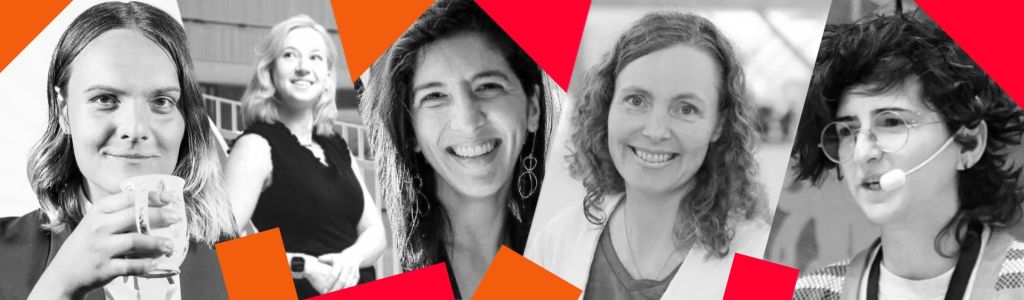
I’ll be on the panel at Almedalsveckan, Tuesday 23 July, 11.00–11.45 in Visby, alongside Lux Miranda, Vilte Szekely, Sara Ljungblad, and moderator Bedour Alshaigy. You can also watch the livestream.

