
I just returned from a week in China’s Greater Bay Area. To be honest, I wasn’t sure about going. Academic trips can be exhausting, the itinerary was packed, and I questioned whether I’d learn anything new. But I’m glad I went, it was a great experience.
I realised a lot but perhaps the summary is; China is not trying to catch up anymore in many domains. In some areas, they’ve already caught up. In others, they’re leading. And the speed at which this happened should make every European researcher pause and think.
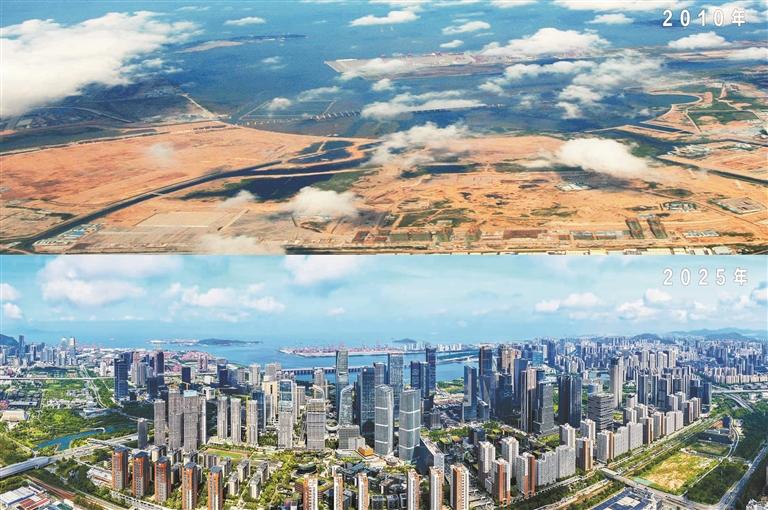
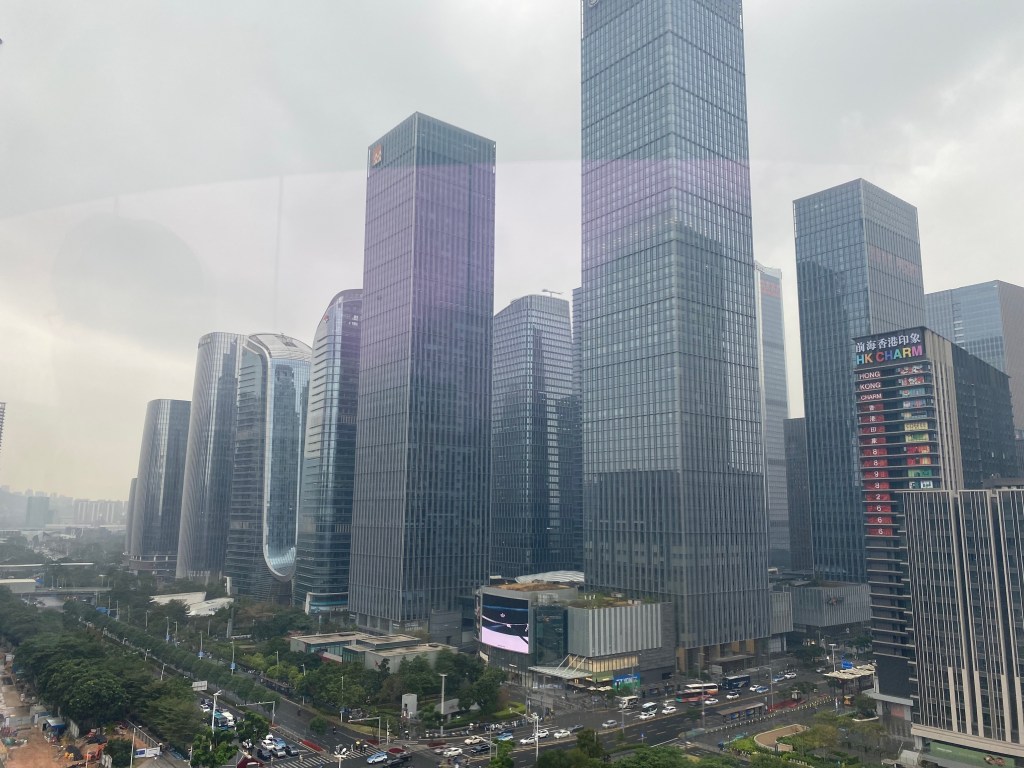
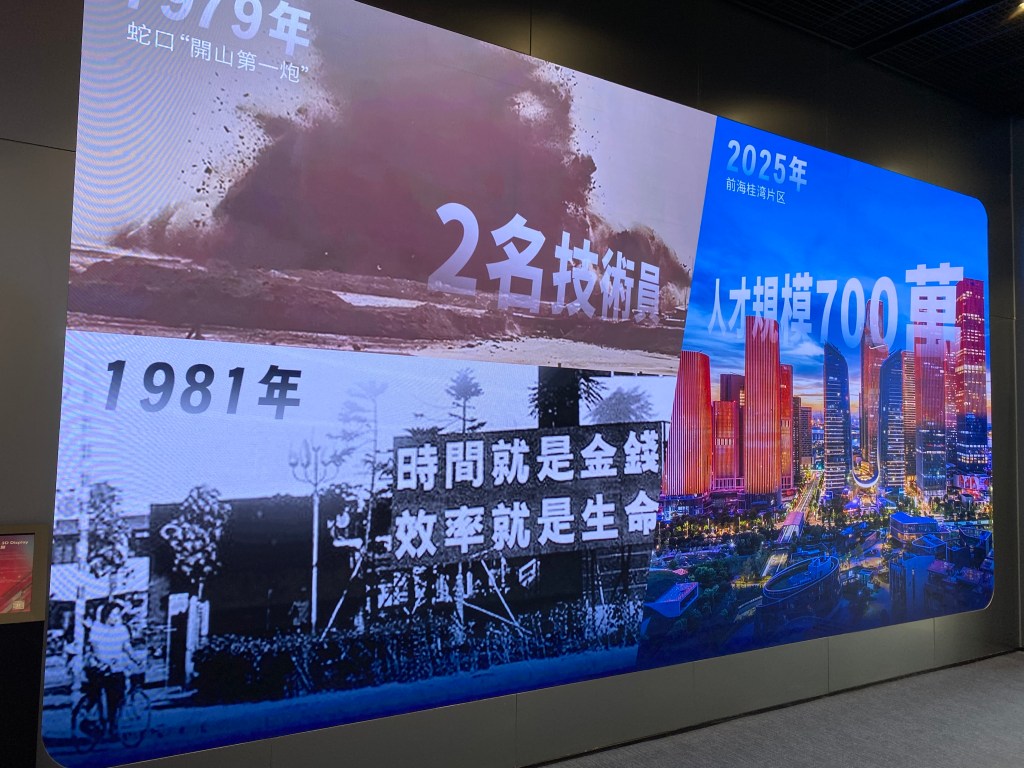
In 1980, Shenzhen had 30,000 people. It was a fishing village. Today, it’s home to over 17 million. That’s not a typo. From 30,000 to 17 million in 45 years. There was nothing on the coastline of Shenzhen in 2010, just 15 years ago. Look at the photo above, it is simply unbelievable. They call it the “Silicon Valley of China,” but that doesn’t quite capture it. Shenzhen has everything, international airport, stock exchange, metro infrastructure, innovation centres, manufacturing clusters, and universities churning out research at a pace I’ve never seen elsewhere.
The cities buzz. Everyone has somewhere to be. And everything is electrified. Electric cars, bikes, motorbikes. All payments through WeChat or AliPay. Cash is a relic. It’s both familiar and utterly foreign. You recognise the urban structures, the startup ecosystems, the venture capital networks. But then you notice things that simply couldn’t exist anywhere else, not with the limitations most countries/regions face. Of all the places we visited, Dongguan was my favourite. Specifically, Songshan Lake Science City, a sprawling innovation hub that somehow balances natural beauty with cutting-edge research infrastructure. We visited the China Spallation Neutron Source, an accelerator-based neutron source that’s one of the major scientific facilities in South China. Standing there, knowing researchers work on this massive piece of scientific infrastructure, I felt that familiar mix of excitement and unease that comes from seeing ambition turned into physical reality at a scale. The lake district wasn’t just impressive for its facilities. It was the integration, universities, research centres, manufacturing hubs, all within kilometres of each other. Great Bay University, innovation centres, tech companies like Vivo with their massive operations. Everything connected, everything designed to minimise the distance between idea and prototype.
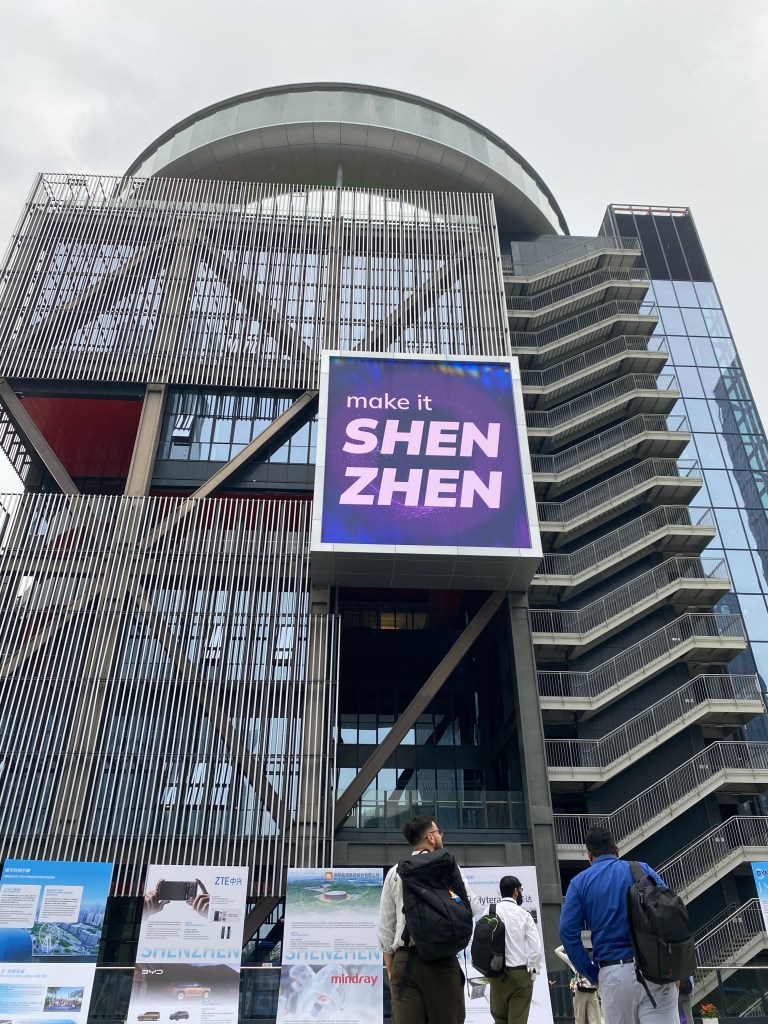
Hong Kong alone has five universities in the world’s top 100. They’re not just teaching institutions, they’re innovation machines. And they’re connected to an ecosystem that works with frightening efficiency: university research, multiple stock exchanges, sophisticated funding mechanisms, and, here’s the crucial bit, manufacturing facilities hours away. Not months. You want to prototype something? The Greater Bay Area can turn your idea into a physical product faster than you can get approval in Europe. This isn’t an exaggeration. We visited company after company, each with entire floors dedicated to showcasing their work, videos of their history, products on display, demonstrations prepared. And what we saw was a tiny fraction of what exists. At every location, people were waiting for us. Not just on time, early, at the entrance, with genuine smiles. The hospitality was remarkable. But what struck me more was the urgency underneath. There is a constant urge to move faster, build bigger, and if a technology helps with that, they’ll master it. If it doesn’t contribute to measurable KPIs, it’s just exploration and, mostly, they have no interest in spending further time on it.
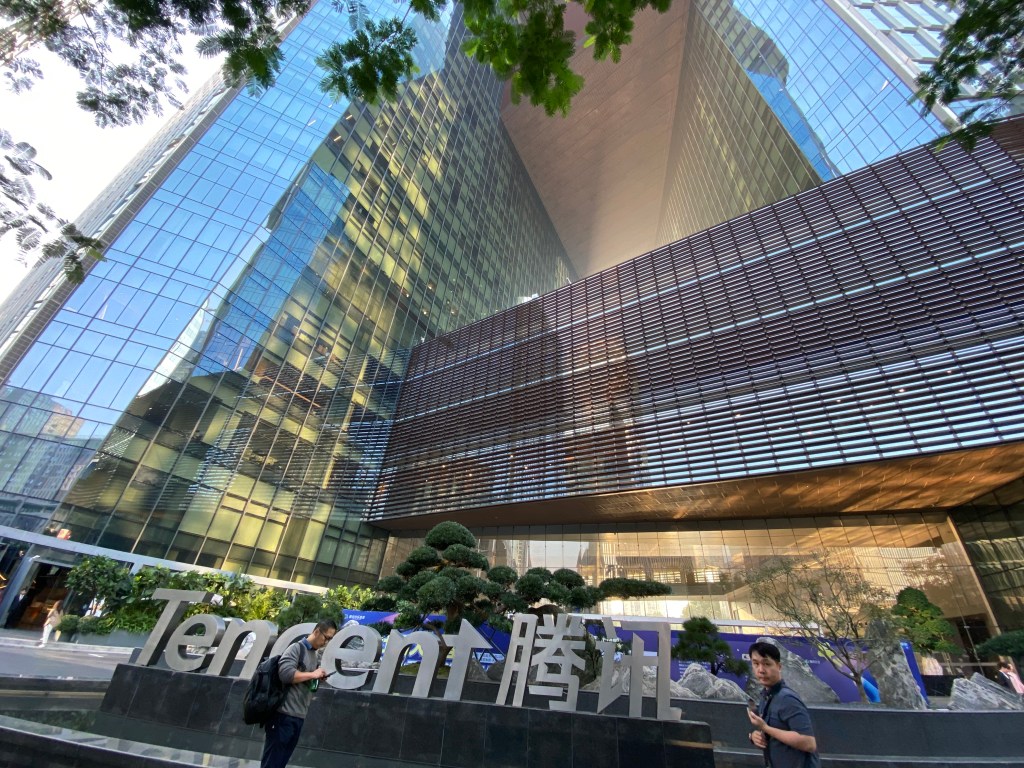
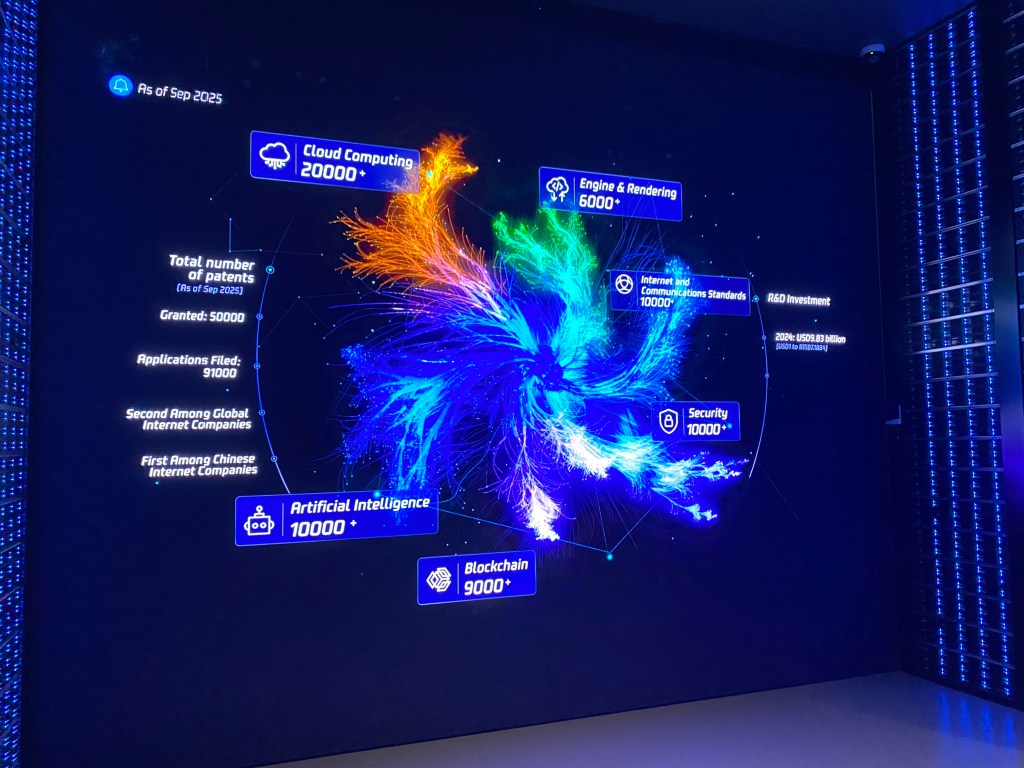
The Tencent visit crystallised something uncomfortable for me. Here’s a single company doing what multiple US tech giants do collectively for China; social media, payments, gaming, cloud services, all integrated. And Europe? We have nothing comparable. Nothing. We surrendered ourselves to American tech giants, and now GDPR, the AI Act, and similar regulations are just attempts to minimise damage already done. Important attempts, certainly, but they’re defensive moves. We’re not building alternatives; we’re managing dependencies. Standing in Tencent’s headquarters, watching demonstrations of their integrated ecosystem, I couldn’t help but think: this is what happens when you decide to actually build in addition to regulate. We need to build the alternatives and not just to build but build them better.
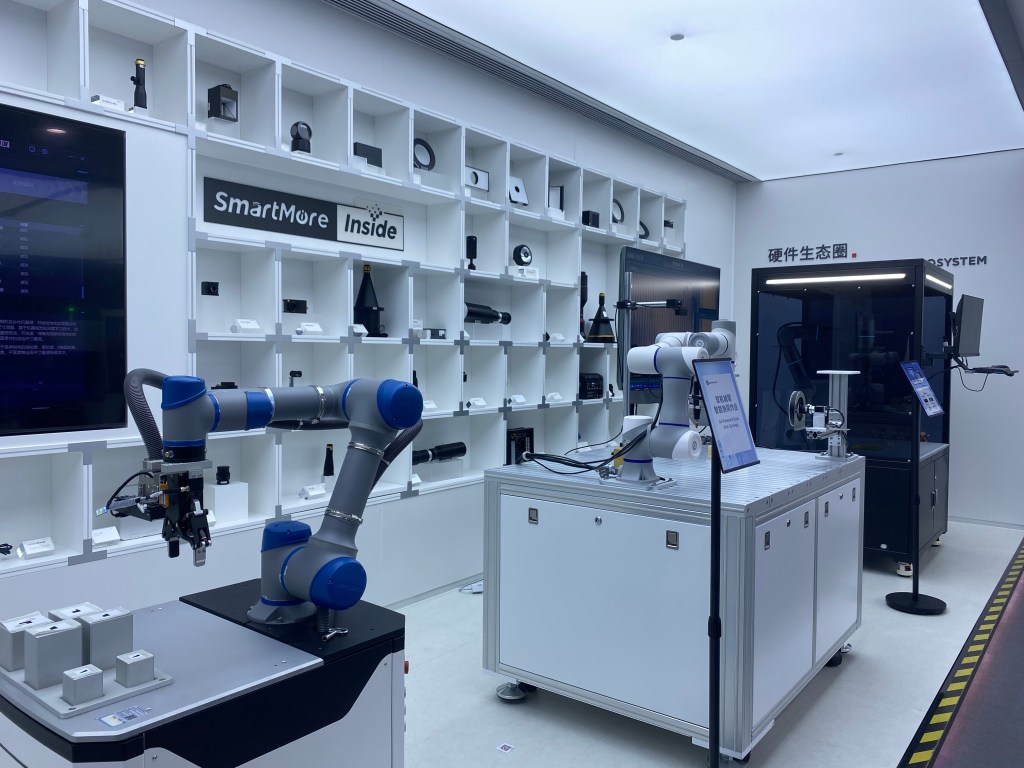
As a robotics researcher, I was particularly watching China’s approach to what we call “embodied AI” or physical AI in my terms, AI-powered robotics systems capable of autonomous operation in the physical world. China is rapidly ascending from being merely a massive robotics market to becoming an innovation leader, driven by government strategy, labour needs, and domestic supply chain localisation. They’re achieving high deployment rates and surging domestic production that’s now surpassing foreign firms, making rapid advancements in cost-effective, agile humanoids and industrial robots. Beijing sees embodied AI as the solution to their demographic challenges, and economic growth needs. I have four different brands of Chinese robots in my lab already. Many of us do. The hardware is impressive, the price points are competitive, and the integration capabilities are advancing rapidly. I agree with several other outlets that shared the opinion on China’s strategy with AI. China isn’t chasing artificial general intelligence in the abstract sense. They’re not interested in the weird, unreachable dreams that dominate many conversations. They want practical applications. They want robotics that work, AI that solves real problems, manufacturing that scales. Every company, every institute, every innovation hub operates with clear KPIs. If technology doesn’t help reach those KPIs, no one has time for it. And not achieving these KPIs is everyone’s main concern.
But here’s what I didn’t see in China, and it’s important for anyone who works on these or similar topics. There was not so much interest in the problems I focus on. Multi-robot systems designed with biomimicry principles? Nowhere. Ecocentric design for sustainability or resilience? Not on their radar. Symbiotic architectures that consider ecosystem impacts? Nonexistent. This isn’t a criticism of Chinese robotics, it’s an observation about priorities. Their KPI-driven development goals and urgency to catch up mean that ecocentric design, sustainability considerations beyond efficiency, and ecosystem thinking are currently luxuries they don’t have time for. Build first, optimise later, consider broader impacts… eventually. And this is precisely where Europe has an edge. Not in production scale, not in deployment speed, not in manufacturing capacity. But in building with these considerations from the start. In designing systems that don’t just work but work within broader ecological and social contexts.
Is this KPI-driven culture dangerous? In many contexts, yes. I cannot imagine applying it in my own work in Sweden. But in China’s context, it’s perhaps the most important tool keeping everyone performing at the level they do. It creates an urgency that’s impossible to find elsewhere. Sooner or later, these ecocentric challenges will become part of the global discussion. I prefer to be in front of these discussions rather than trying to compete in a race I’ll never win. I am sure this is repeatable way of thinking for many other research topics. Trustworthy AI is something I am interested as you all would know, certainly not in the focus of any discussions yet (though there are higher level discussions happening, business do not have time for this today) but when it will be time to implement something, China will look Europe for ideas.


The European Question
I travelled with exceptional people, roboticists, cancer researchers, physicists, chip innovators. Throughout the week, we kept looking at each other with wide eyes, confirming we were hearing what we thought we were hearing. After a few days, the shock wore off, but the amazement didn’t. We had deep discussions about what the world might look like in 10-20 years, especially after seeing what Shenzhen accomplished in just 15 years. And we discussed something uncomfortable; our role in all this, how difficult it is not being part of this progress machine, how appealing and unsettling the whole system feels at once.
I’ve always been vocal about Europe’s innovation speed. We are moving just at right speed. I have zero fear of missing out. Missing out what? To collect people’s personal data without their concern? To push models that are not ready for proper benefit? To ask people to pay for hallucinations? To fire people without any proper proof of progress and then hiring them again? Seeing China strengthen something crucial: we’re operating in different realities, building and building for different societies. Europe cannot and should not compete on China’s terms. We’re playing different games on different fields. At the same time, China has serious questions that need answering, massive challenges ahead. The Chinese themselves say this. But today, there is no other place like China. No other region can do what China does at the scale and speed they manage.
In contrast with what I read every day, less regulation won’t help Europe compete with China or the US. We have different constraints, different values, different goals. For instance, Sweden produced several unicorns this year. A small European country can create an environment for innovation not because of fear of missing out, but because there’s space to be critical, creative, and deeply connected with the rest of the world. China and Sweden are simply incomperable. China can learn critical thinking from us. We can learn… well, what exactly? Perhaps that catching up is possible even under sanctions, even when you’re enormous, even when the world expects you to move slowly. Perhaps that urgency and scale can coexist. Perhaps that different approaches to innovation can all produce results. But more importantly, we need to remember what makes our societies work. I’ve always been open about the future I dream for, one built on social democracy, where we give everyone security to be themselves and safety to find what they can do best for this world. This is a luxury globally. Living in Sweden makes many of us take for granted that most of this dream either exists here or isn’t far off. Therefore, I am adamant that the EU can be the example showing China what comes after catching up, showing them what to build once the speed race is over.
Is China perfect? No, far from it. Should Europe move faster? Maybe. But should we abandon our values to compete? Absolutely not.
I’m grateful for the hospitality and kindness of everyone we met. Some of the researchers and entrepreneurs I met, I cannot wait to meet again somewhere in the world. And I’m grateful to them who maintained energy and focus throughout an exhausting schedule, sharing honest reflections, and reminding me that critical engagement with what we see is itself a valuable skill.
#AcademicLife #Research #Innovation #China #GreaterBayArea #Shenzhen #HongKong #Dongguan #Europe #Innovation #Technology
 Didem Gürdür Broo